Aquarium myths vs. facts: what the research shows

People repeat these five ideas about aquariums all the time. Here is each one beside what the Association of Zoos & Aquariums has published.

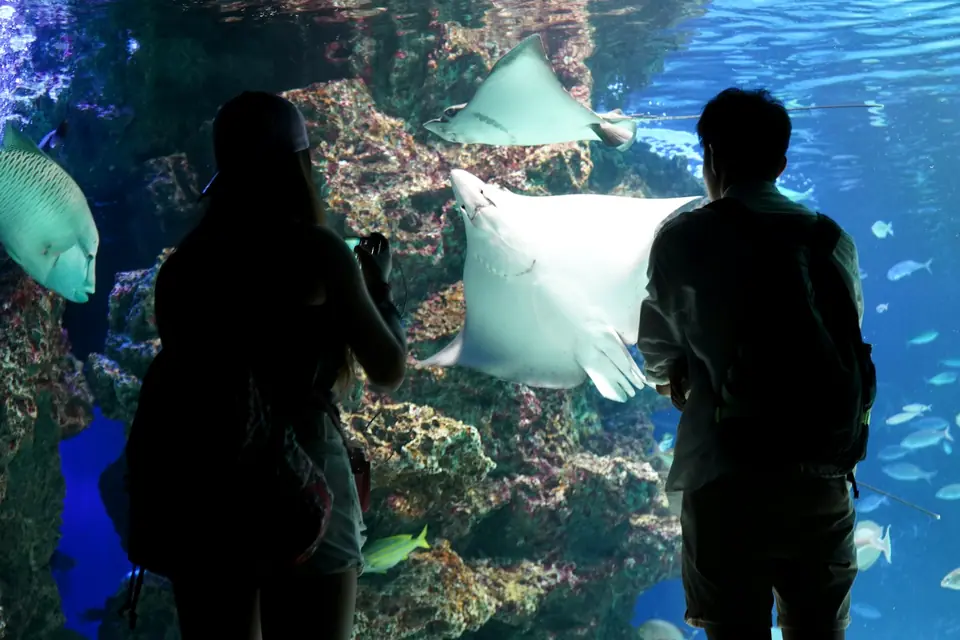
Two young visitors standing at a huge aquarium window as a pale ray swims past

Myth 1: “Aquariums only exist for entertainment.”

What the research shows

$230M+a year spent on field conservation by AZA-accredited zoos and aquariums

Conservation, scientific research and education are part of the missions and accreditation standards of many professional aquariums. The Association of Zoos & Aquariums describes conservation as a priority of its accredited institutions.

Aquariums also contribute research on animal biology, health, behavior, habitats and conservation. That research helps scientists understand species and how they can be protected in the wild.

Source: Association of Zoos & Aquariums, Conservation and About Us.

Myth 2: “Every aquarium follows the same animal care standards.”

What the research shows

5 yearsuntil an accredited facility goes through the full accreditation process again

Accreditation is where the standards differ. AZA accreditation involves expert review and a multi-day inspection that examines animal welfare, veterinary care, living environments, nutrition, conservation, safety, education and other parts of an institution.

Accredited facilities must go through the full process again every five years.

Source: Association of Zoos & Aquariums, Accreditation.

Myth 3: “If an aquarium is open to the public, it must be AZA-accredited.”

What the research shows

About 10%of USDA-licensed animal exhibitors are AZA-accredited

Being open to the public and being accredited are two separate things. AZA says only about 10% of USDA-licensed animal exhibitors are AZA-accredited.

That makes accreditation something a visitor can check before a visit, rather than assume.

Source: Association of Zoos & Aquariums, What Is Accreditation?

Myth 4: “Animals in accredited aquariums are simply placed in tanks and displayed.”

What the research shows

1+ a yearwelfare assessments for each animal at an accredited institution

AZA standards look at far more than whether animals are fed. They consider health, nutrition, living environments, social groupings and enrichment intended to encourage natural behavior.

AZA says animals at accredited institutions receive a welfare assessment at least once a year.

Source: Association of Zoos & Aquariums, Becoming Accredited.

Myth 5: “Most animals in aquariums were taken from the ocean.”

What the research shows

Mostanimals at AZA-accredited zoos and aquariums today were born in human care

In 2019 AZA reported that most animals in AZA-accredited zoos and aquariums today were born in managed care, meaning in a zoo or aquarium.

Some animals did come from the wild, including rescued animals. AZA-accredited zoos and aquariums frequently work with the U.S. Fish and Wildlife Service to rescue, rehabilitate and care for wild animals such as sea turtles, manatees and sea otters until they can be released.

Source: Association of Zoos & Aquariums, Reimagining the Animal Management Puzzle and Why Zoos and Aquariums Are Beneficial.

See the rescue work behind these facts

How accredited aquariums help sea turtles, manatees and hundreds of other species, and what an accreditation inspection examines.

Sources

  1. Association of Zoos & Aquariums. Conservation. aza.org.
  2. Association of Zoos & Aquariums. About Us. aza.org.
  3. Association of Zoos & Aquariums. Accreditation. aza.org.
  4. Association of Zoos & Aquariums. What Is Accreditation? aza.org.
  5. Association of Zoos & Aquariums. Becoming Accredited. aza.org.
  6. Association of Zoos & Aquariums. Reimagining the Animal Management Puzzle. aza.org, 2019.
  7. Association of Zoos & Aquariums. Why Zoos and Aquariums Are Beneficial. aza.org.